
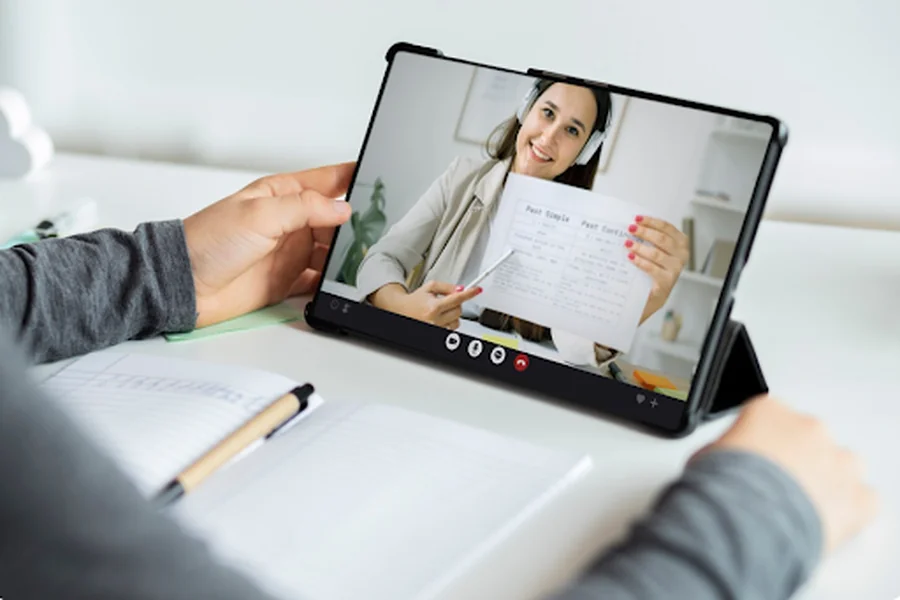
One day, someone is chatting away, and it feels like you can keep up, and the next—bam—there’s a phrase or an accent or a word you’ve never heard before, and suddenly it’s like trying to jump over a wall that keeps moving.
That’s where tools like the versant test come in. Fast, automated, almost like a radar for your speaking and listening skills, it gives a snapshot of exactly where someone stands in a language, without the weeks of waiting or endless guesswork. It’s neat, really, when technology takes something that used to feel slow and mysterious and makes it almost instant.
Why Fast Feedback Matters
Learning a language isn’t linear. Some days comprehension clicks, other days it’s like wading through mud. The problem with traditional methods is waiting and waiting for a teacher to grade a recording, for a class assignment to be evaluated, or for a feedback email to arrive.
Automated technology changes all that. It’s instant. It’s measurable. It’s motivating. Instead of guessing, learners see exactly where their skills stand.
- Immediate clarity: No more wondering if mistakes went unnoticed.
- Targeted improvement: Focus on what really needs work.
- Consistent tracking: Progress is visible over time.
Lina, for instance, could track improvement weekly instead of monthly. Small, tangible wins kept her motivated. And motivation, let’s be honest, is half the battle.
Speaking Skills Like a Game
Speaking a language is kind of like playing a video game, really. You have attack moves (words), dodges (intonation, phrasing), and even combos (fluid sentences). You don’t always notice improvement, but feedback systems—like the Versant test—act like a scoreboard.
There’s a story from a language instructor: one student struggled with certain consonants, stumbling over “th” sounds repeatedly. After a few automated sessions, the system highlighted patterns and pinpointed weaknesses. The student could practice targeted exercises, see small improvements in minutes, and eventually string together sentences that once felt impossible.
- Practice consistently, even if only for a few minutes.
- Focus on problem areas first.
- Treat small wins like leveling up in a game.
The immediacy of technology turns what once felt like grinding into something rewarding.
Listening Skills: Dodge, Parry, Understand
Listening is trickier. Unlike speaking, you can’t control what someone says, how fast they say it, or their accent. Automated feedback tools can help isolate challenges.
- Break down listening into micro-skills.
- Identify patterns of difficulty.
- Practice in short, repeated bursts.
Technology as a Motivator
It’s amazing how seeing numbers, charts, or immediate feedback can spark motivation. Humans are visual creatures; progress displayed visually hits differently than vague praise.
Lina’s first Versant test results were sobering. But she could see her weak points clearly. She liked seeing them not as failures but as targets. The next test? Improvement. And another one? Even better. That sense of progression—a dashboard of your own skills—is empowering.
Real-Life Applications
Why does fast skill tracking matter beyond the classroom? Real-life situations are less forgiving than practice exercises.
- Meetings: Understanding colleagues in real time.
- Travel: Responding correctly to local speakers.
- Networking: Making strong first impressions without hesitation.
Imagine attending an international conference. A participant who’s used tools like the Versant test can adjust pronunciation, catch nuances in speech, and engage confidently. Instant feedback has a direct, real-world impact.
Tips for Maximizing Technology
- Be consistent – Regular mini-sessions beat occasional long ones.
- Review results carefully – Don’t just glance at the score. Look at specifics.
- Set small, achievable goals – “Improve this vowel sound” beats “speak perfectly.”
- Mix feedback with real practice – Technology alone isn’t enough. Combine with conversation.
- Celebrate improvements – Even tiny wins matter; motivation compounds.
Overcoming the Plateau
Anyone learning a language hits plateaus. Progress stalls. Motivation dips. Feedback technology can help by identifying exactly where progress has slowed.
Instead of guessing, learners get a clear picture: “Ah, I’m stuck with certain sounds,” or “My listening comprehension is lagging here.” Targeted work resumes momentum.
- Track recurring problem areas.
- Adjust focus based on real-time insights.
- Avoid frustration by seeing measurable small wins.
Conclusion: Language Learning in the Fast Lane
Technology has changed the way we learn languages. Tools like the Versant test take what used to be slow, ambiguous, and frustrating and make it measurable, immediate, and motivating. Learners can see strengths, pinpoint weaknesses, track progress, and engage more confidently in real-world situations.
Language learning isn’t always easy—but with the right technology, it can feel like leveling up a character in a game: small, continuous improvements, instant feedback, visible progress, and the satisfaction of knowing every bit of practice counts.
Convert Inches to Meters, cm, mm, and Feet
Converted Values:
Meters (m): 1.016
Centimeters (cm): 101.60
Millimeters (mm): 1016.00
Feet (ft): 3.33