

A unit of measurement, an inch, is a standard in both the imperial and the US customary system. It is widely applied in the determination of the length or the distance, particularly in such cases as height, fabric size, and even minor objects such as screws or nails. In layman language, one inch can be said to be 1/12 th of a foot or 2.54 centimeters. This may appear just that easy, but it is interesting to know its historical background and how it compares with the other units.
The History of the Inch
The inch is a historical item with an interesting background. It is not a new thing, as it was applied in ancient societies. Inch derives a Latin term: the term uncia used to mean one-twelfth which was the name used to describe the twelfth part of a foot. It was originally measured by the width of the human thumb which was somewhat different in each individual. The inch came to be standardized in due course and in 1959 the international inch was defined as precisely 2.54 centimeters, the metric equivalent.
Conversion Between Inches and Other Units
Inches are common in a number of measuring systems such as the imperial system in the United States and the UK. The following is the proportion of an inch to other common units of length:
- 1 inch = 2.54 centimeters (metric system)
- 1 inch = 25.4 millimeters
- 1 inch = 1/12th of a foot
- 12 inches = 1 foot
The conversion is significant to understand in numerous applications, including the translation of measurements between imperial and metric systems of measurement when dealing with other countries or industries.
How Long Is an Inch in Everyday Life?
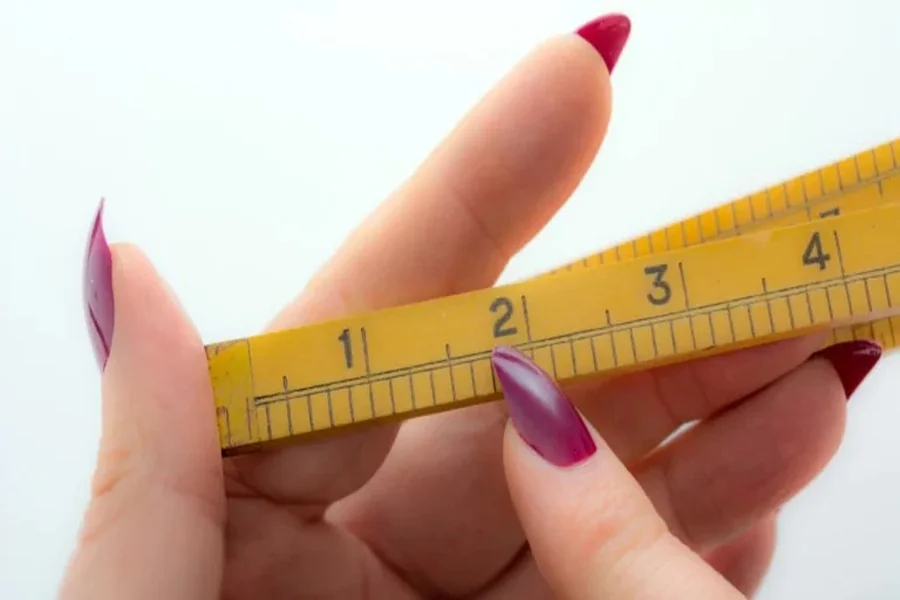
The inch is relevant in our everyday life. It is usually applied to quantify various things including clothing sizes, screen sizes, and so on. As an example, in the case of buying a TV or a smartphone, the screen sizes are commonly expressed in inches. The diagonal size of the screen is known as a 15-inch laptop. At the same time, cloth is usually sold by the yard, but smaller pieces of cloth are measured in inches, particularly when tailoring or working on small projects.
Other common measurements of inches are:
- Rulers and measuring tapes are often marked in inches, especially in the United States.
- Height: In the US, people often refer to their height in feet and inches, such as “5 feet 8 inches.”
- Home improvement: When measuring small dimensions, like a piece of wood or a door frame, inches are typically used.
The Importance of Inches in Construction and Engineering
Inches are important in construction, engineering and manufacturing where they are a precise measurement. Construction materials such as lumber, pipes, and wiring in the United States are commonly measured in inches, and measuring tapes and tools are marked off in inches. Inches are also used by engineers in the design of both mechanical parts so that they can be fit correctly.
The Inch in the Countries.
Inch belongs to imperial system which is commonly used in the United States and some other countries. Most of the world however follows the metric system which is in units of ten, meters and centimeters. This sometimes confuses one in making comparisons between measurements in the various regions.
Although the metric system is widely used, there are still some countries such as the US that still use the imperial system in their daily activities. An example is the feminine use of inches in road signs, personal height and other daily objects in the US. Being a matter of tradition and convenience, this choice can be explained by the fact that the imperial system is rooted in the American culture and trade.
Read More: How Big Is 5 Inches Explained With Simple Real Life Examples
Why Do We Still Use Inches?
Inches still remain in common use even in a world where the metric system is in most cases the predominant system of measure, particularly in the United States. Others suggest that it is because of historical factors, once a system has been firmly embedded within a culture, it may be hard to change. Some people also hold the view that imperial system offers more convenient scales of common things, particularly in work like carpentry and tailoring. Inches are also familiar which makes people find it easy to think of small lengths.
The Inches In Technology and Design
Inches are still relevant in the technological world. Be it the dimensions of the smartphone screen, TV, or the size of a laptop, these numbers are usually expressed in inches. Inches are also used by the designers and engineers to come up with accurate products models, blueprints, and schematics.
Inches are widely applied in designing documents whether print designs or graphic designs. Books, flyers and magazines have their page size frequently calculated in inches, especially in the United States, where 8.5 x 11-inch paper (12 1 /2 x 9 1 /2) is the standard.
Final Thought
The length of an inch can be used to explain how this unit of measurements. Though very small, is part of the bigger world, the imperial or metric world. Although the metric system can be the leading one in the world. The use of the inch is still ingrained in life and many trade activities, especially in America. It is through the understanding of its history, uses and conversion rates that we can better see how measurements build our world and how we relate to it.
FAQs
How many millimeters are in an inch?
One inch equals 25.4 millimeters.
Why is an inch equal to 2.54 centimeters?
In 1959, the length of an inch was officially standardized as 2.54 centimeters based on a global agreement. To align imperial and metric systems.
How do I convert inches to centimeters?
To convert inches to centimeters, multiply the number of inches by 2.54. For example, 5 inches equals 12.7 centimeters.
Why is the inch divided into 12 parts?
Historically, the inch was divided into 12 parts because it was based on the width of a human thumb. And dividing it into 12 provided a practical and manageable fraction for everyday use.
What other units are used in the imperial system?
Other units in the imperial system include feet, yards, miles, pounds, and gallons. Each has a unique role in measuring length, weight, volume, and more.
Convert Inches to Meters, cm, mm, and Feet
Converted Values:
Meters (m): 1.016
Centimeters (cm): 101.60
Millimeters (mm): 1016.00
Feet (ft): 3.33


